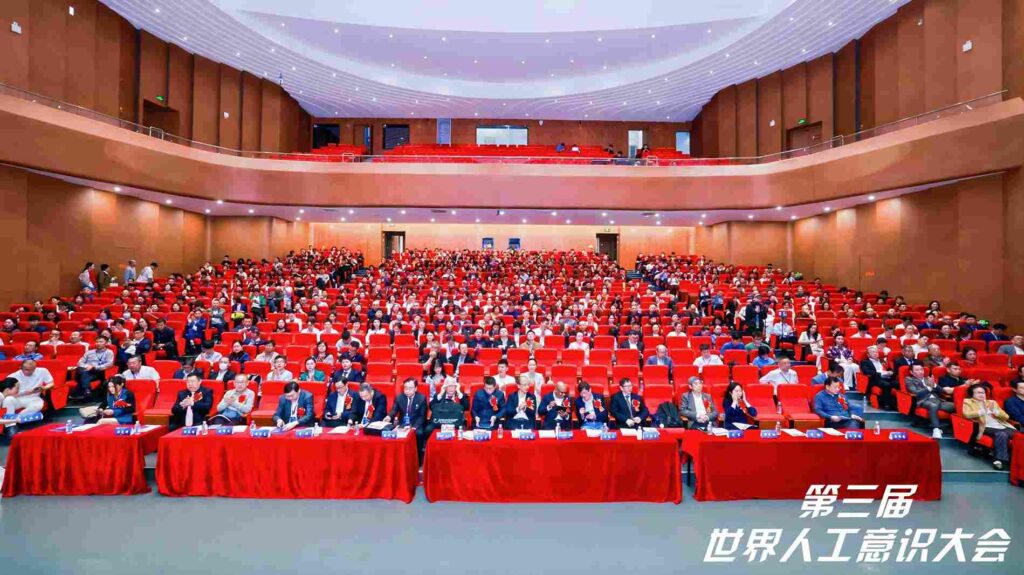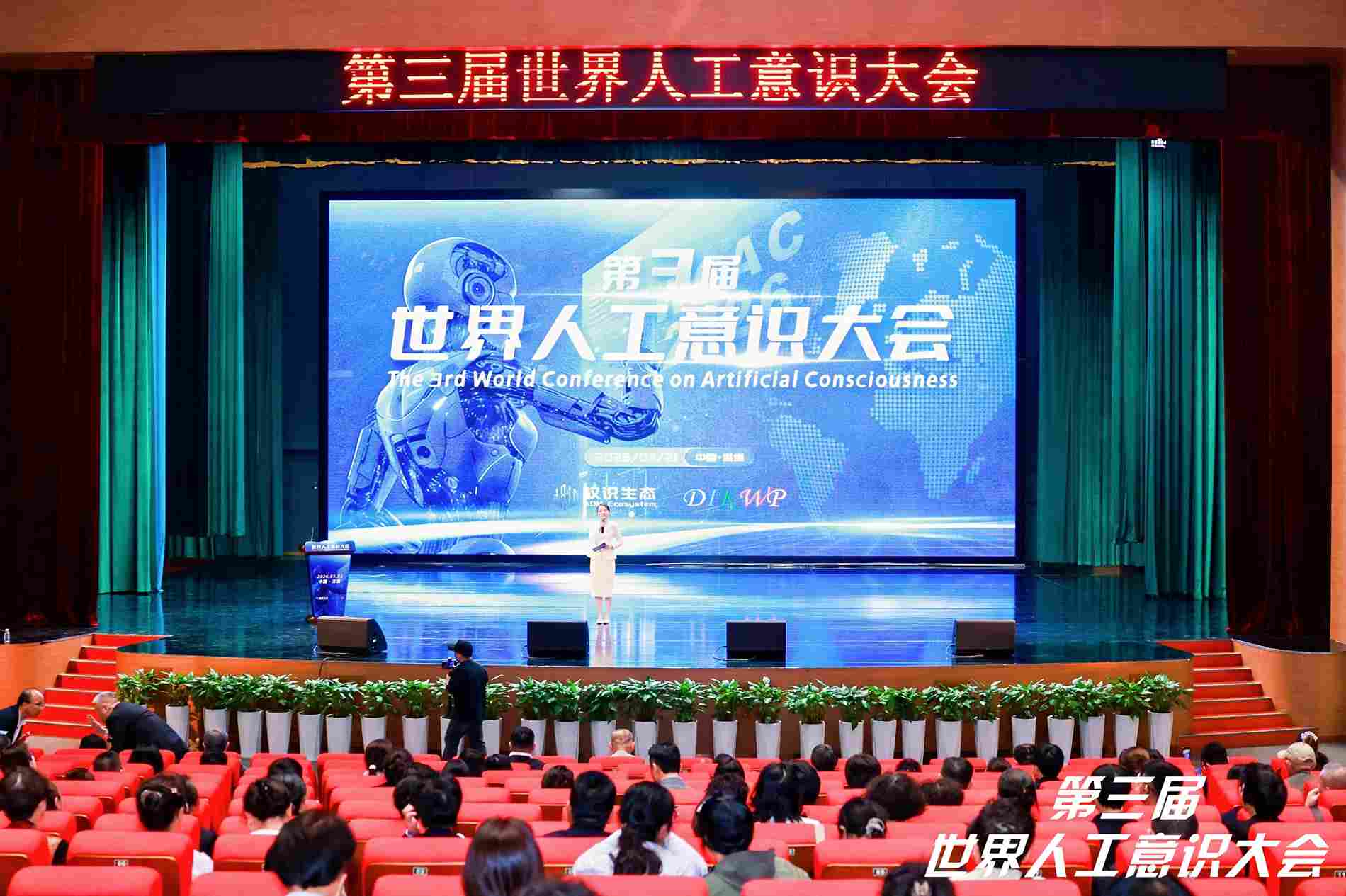
SHENZHEN, China – March 21, 2026 – The 3rd World Conference on Artificial
Consciousness (WAAC) opened on March 21st at Beijing Institute of
Technology and Moscow University in Shenzhen, China. "Capital of
Innovation." Under the theme "Exploring Foundations and Practice of
Artificial Consciousness: AI Empowering Active Medicine," this landmark
event gathered Nobel Prize laureates, Turing Award winners, academicians,
and interdisciplinary experts from around the globe. Organized by the World
Association of Artificial Consciousness (WAAC) and the World Academy of
Artificial Consciousness, in partnership with the WHO Collaborating Center
for Traditional Medicine, participants engaged in deep dialogue on
artificial consciousness, brain science, cognitive science, active
medicine, and ethical governance—jointly exploring critical pathways for
AI evolution from instrumental intelligence to cognitive, collaborative,
and value-based intelligence.
Nobel Laureate and Turing Award Winners Lead Global Dialogue
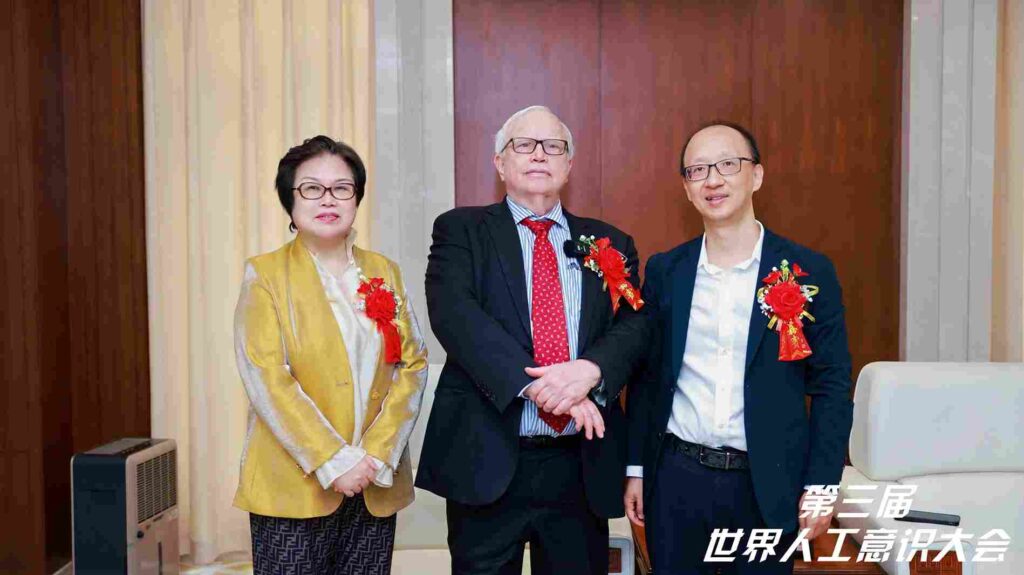
The conference featured distinguished speakers including Professor James J.
Heckman, 2000 Nobel Prize winner in Economics, who delivered the opening
keynote address. As the Henry Schultz Distinguished Professor of Economics
at the University of Chicago, Professor Heckman analyzed how artificial
intelligence advances causal mechanism research in social sciences and
economics. He emphasized that rigorous scientific research must be grounded
in causal analysis—not merely statistical correlation but uncovering the
underlying mechanisms generating results.
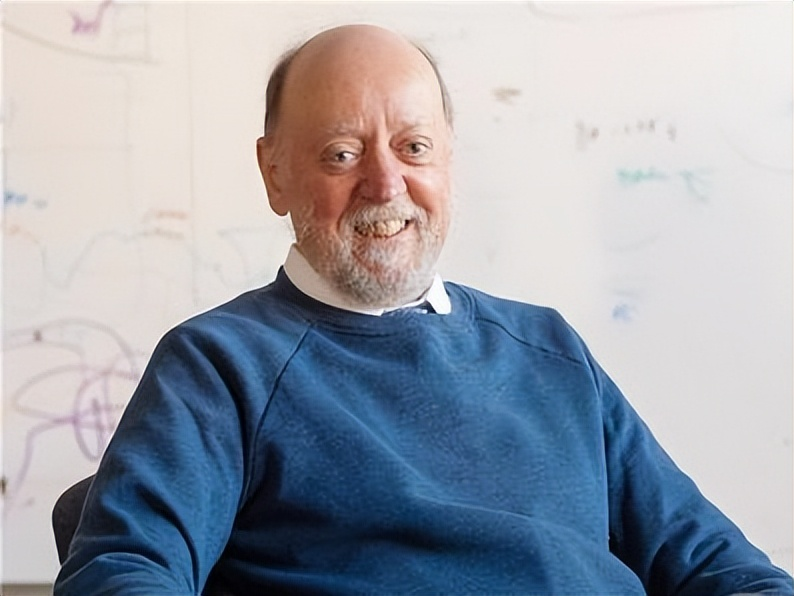
Via video address, Professor Jack Dongarra, 2021 Turing Award laureate and
Distinguished Professor at the University of Tennessee, brought cutting-
edge insights from international computational science. He noted,
"Artificial consciousness sits at the intersection of computer science,
neuroscience, philosophy, cognitive science, and AI. Advances in
algorithms, data, and large-scale systems are providing new possibilities
for exploring these ancient and profound questions."
Professor Duan Yucong, Honorary Academician and President of the World
Academy of Artificial Consciousness and Director-General of the World
Association of Artificial Consciousness, pointed out in his address that AI
is accelerating from perceptual intelligence toward cognitive,
collaborative, and value-based intelligence. He emphasized that artificial
consciousness research has become a core bridge connecting theoretical
breakthroughs, technological innovations, and practical applications—no
longer merely an academic proposition but a critical issue profoundly
influencing future technological paradigms, industrial forms, and social
governance.
Pioneering Research: From Sensors to Digital Life
Academician Zhang Xueji, foreign member of the Russian Academy of
Engineering and Fellow of the American Institute for Medical and Biological
Engineering, shared research progress from sensors to digital life and
artificial consciousness. He stated that consciousness is not merely brain
activity but a composite concept requiring physical brain foundations to
progressively develop intelligence, meta-cognitive abilities, and
consciousness—clarifying the core logic of consciousness formation. He
mentioned that Tsinghua University teams are constructing intelligent
sensor systems integrating six types of sensory information, with fiber-
optic sensor integrated energy systems ultimately realizing artificial
consciousness system development. Related applications will assist
biological process research and optimize human health outcomes.
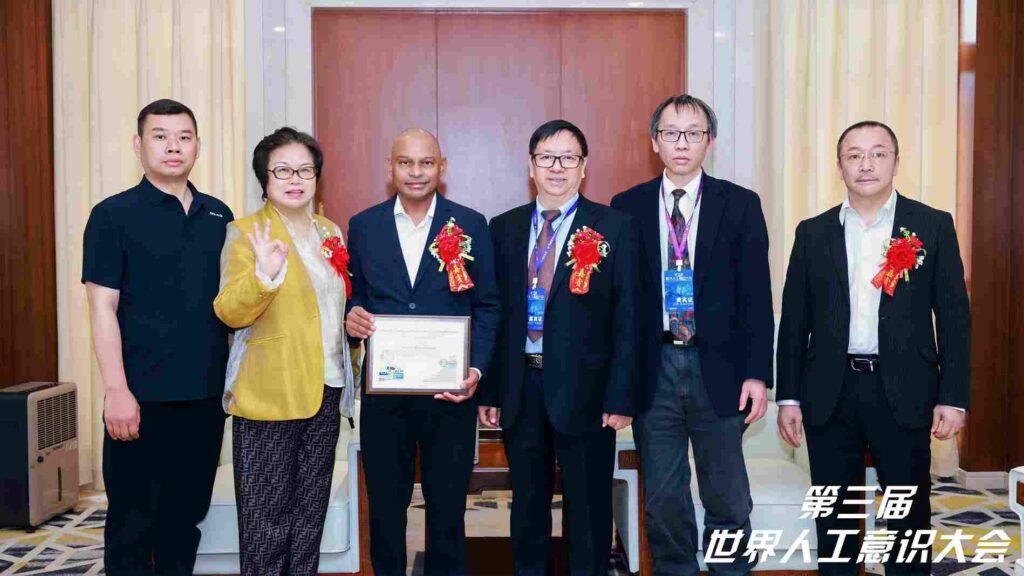
Academician Seeram Ramakrishna, foreign member of the Chinese Academy of
Engineering and Fellow of the Royal Academy of Engineering, presented
groundbreaking research from the computational science perspective. He
noted that consciousness is the capacity for subjective experience,
encompassing perceptions of thoughts, emotions, and external stimuli. From
a scientific perspective, consciousness is also a natural ability formed
through brain development and psychological processes. He detailed Tsinghua
University teams; intelligent sensor systems covering six sensory
modalities, whose results will be applied to biological process research
and improving human health.
Major Milestone: Ethics and Safety Joint Laboratory Launched
Following Professor Ramakrishna’s presentation, the conference held a significant ceremony—the official launch of the Artificial Consciousness Ethics and Safety Joint Laboratory. This milestone marks substantial progress in ethical governance and safety assurance for the artificial consciousness field. The laboratory, spearheaded by the Ethics and Safety Control Professional Committee of the WAAC, is dedicated to building ethical safety frameworks for artificial consciousness systems, exploring blockchain and other trusted technologies to construct tamper-proof data foundations, and providing institutional guarantees and technical support for healthy artificial consciousness development.
Academician Fan Daiming, member of the Chinese Academy of Engineering and foreign member of the American Academy of Medicine and the French Academy of Medicine, delivered a presentation titled “Connected Emergence, Tracing Life Origins.” He pointed out that life is not merely a mathematical or physical concept but a complex life system composed of numbers, elements, connections, and emergences. He proposed the core concept of “Seeking Images to Understand the Way.” Professor Fan emphasized that medicine should integrate all elements, clarifying relationships between elements and emergent effects—this constitutes a complete view of life.
Interdisciplinary Innovation: From Quantum Biology to Active Medicine
Professor Duan Yucong presented a specialized technical report titled “Artificial Consciousness Evaluation and Implementation Based on DIKWP Model.” He originally proposed the DIKWP model, adding a purpose dimension to traditional data, information, knowledge, and wisdom dimensions, establishing a complete engineering framework for artificial consciousness systems. This original theoretical contribution fills gaps in the systematic evaluation of artificial consciousness. Professor Duan demonstrated the DIKWP-AC 2.0 system, which possesses significant structural advantages in identity continuity, memory governance, role boundary safety, audit replay, and multi-agent orchestration—opening feasible pathways for artificial consciousness from theoretical concepts to engineering practice.
Academician Feng Yu, Fellow of the International Academy of Science and Technology and Executive Chairman of the Active Medicine Committee of the WAAC, delivered a presentation titled “Active Medicine Promoting High-Quality Development of Traditional Chinese Medicine.” He showcased innovative practices of active medicine in TCM from multiple perspectives including cancer coexistence concepts, clinical indicators for younger populations, and brain-computer interface applications. He introduced breakthrough research on memory-type central memory T cells and distinctive rehabilitation programs combining sound, fragrance, and music therapy with quantum fields—providing entirely new possibilities for non-invasive brain-computer interface technology.
Professor Fan Guanghui, Professor at Shenzhen University and Co-Chairman of the Active Medicine Committee of the WAAC, presented a compelling presentation titled “Active Medicine: A Call for Human Health.” Rooted in core human health needs, he delved into the modern medical value of active medicine, pointing out that traditional medical models focus on disease treatment while active medicine emphasizes pre-disease prevention and proactive intervention, relying on data-driven precise health management to achieve the core transformation from passive treatment to active prevention.
Ethical Governance and AI for Good
Professor Li Lizhong, Vice Director-General of the WAAC and Fellow of the World Academy of Productivity Science, emphasized ethical and safety control issues in artificial consciousness. As head of the Ethics and Safety Control Professional Committee, he and his colleagues consistently believe that safety and responsibility should be placed at the core of technological development. They are exploring how to use blockchain and other trusted technologies to build tamper-proof data foundations for artificial consciousness systems—committed to building scientific frameworks for ethical models and contemplating how to make AI agents both intelligent and benevolent, practicing the fundamental principle of “AI for Good.”
Researcher Duan Weiwen from the Artificial Intelligence Research Promotion Center of the Chinese Academy of Social Sciences explored the frontier topic “AI-Driven Artificial Intimacy and Social-Emotional Alignment.” He analyzed in depth the core trend of AI transforming from tool to relational entity, highlighting profound real-world challenges currently facing society. He innovatively proposed a cognitive-social-emotional triangle theory, emphasizing the use of rational wisdom to harmonize human-AI relationships and help build a birth-friendly society.
Professor Cai Hengjin, foreign member of the European Academy of Sciences and Fellow of the International Academy of Advanced Technology and Engineering, delivered a brilliant presentation titled “From Single Cells to Digital Existence: Evolutionary Logic of Final Cause and Order Reconstruction of Artificial Consciousness.” He re-examined physics development since Bacon from a philosophical perspective, emphasizing the need to reintroduce final cause into the scientific system—proposing core concepts such as cognitive anchoring and cognitive inertia, and arguing that consciousness and intelligence, along with life, originated simultaneously.
Academician Si Binwen, Fellow of the Russian Academy of Natural Sciences, the International Eurasian Academy of Sciences, and the United Nations Academy of Sciences, explored “Human Body and Soul Consciousness at Quantum Scale.” Starting from the physics perspective of life essence, he shared breakthrough progress in quantum spectroscopy measurement and quantum device development, detailing quantum experimental research related to genes, cells, soul, and body, as well as quantum imaging technology’s detection achievements for life states.
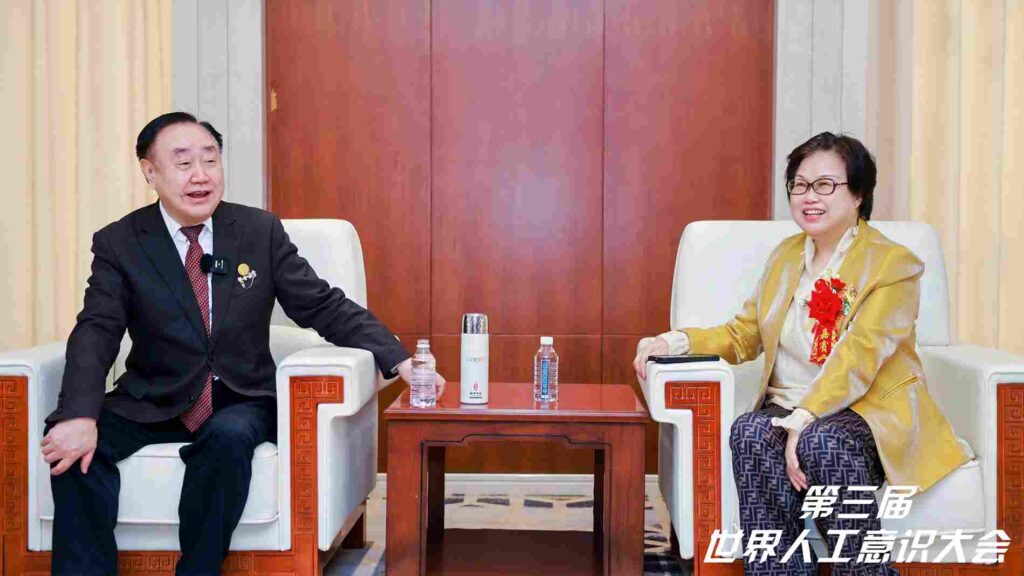
‘Professor Zhu Xinlan, Executive Director of the WHO Collaborating Center for Traditional Medicine in China and Senior Researcher, delivered a profound presentation titled “Artificial Consciousness Era: Reunderstanding Humans and Health.” She proposed three important initiatives: first, not only curing “diseases” but viewing “people” holistically; second, not only strengthening disciplines but achieving true convergence of wisdom; third, not only catching up with technological frontiers but participating in co-constructing future rules.
Shaping the Future of Human-AI Collaboration
The conference not only featured heavyweight keynote presentations in the main forum but also carefully organized multiple parallel sub-forums conducting comprehensive, in-depth discussions and exchanges on core topics including artificial consciousness evaluation system construction, active medicine innovation practice, digital economy compliance governance, and ethical safety risk control. Young scholars, industry elites, and policymakers from around the globe gathered at various sub-forums to share cutting-edge research findings and frontline practical experiences—achieving cross-disciplinary integration and transnational dialogue of thought collision and academic resonance.
The 3rd World Conference on Artificial Consciousness represented a vivid practice of advancing the strategies of rejuvenating China through science and education, developing a quality workforce, and innovation-driven development. The conference closely aligned with strategic arrangements in China’s 14th Five-Year Plan and Long-Range Objectives for 2035 for accelerating the development of new-generation artificial intelligence—fully promoting the deep integration of AI and the real economy.
Attending experts and scholars unanimously agreed that development in the artificial consciousness field must always uphold a people-centered development philosophy and take “AI for good, serving humanity” as the fundamental value pursuit. While promoting technological iteration and innovation, they must strictly guard ethical safety baselines to ensure artificial consciousness technology steadily advances along the correct direction.
The conference emphasized the need to firmly grasp AI’s core positioning as strategic technology leading a new round of technological revolution and industrial transformation—strengthening forward-looking layout and comprehensive planning, and promoting AI to play greater roles in ensuring and improving people’s livelihood, promoting social fairness and justice, and serving people’s better life needs.
As artificial consciousness research advances from philosophical speculation toward scientific engineering, this conference demonstrated important contributions to global AI development and embodied the shared wisdom and responsibility of the international community in shaping the future of human-AI collaboration. The WAAC will continue building international cooperation platforms, promoting cross-disciplinary innovation, and jointly writing a new chapter in the development of the intelligent era.